
1. Clothes Come Out Soaking Wet
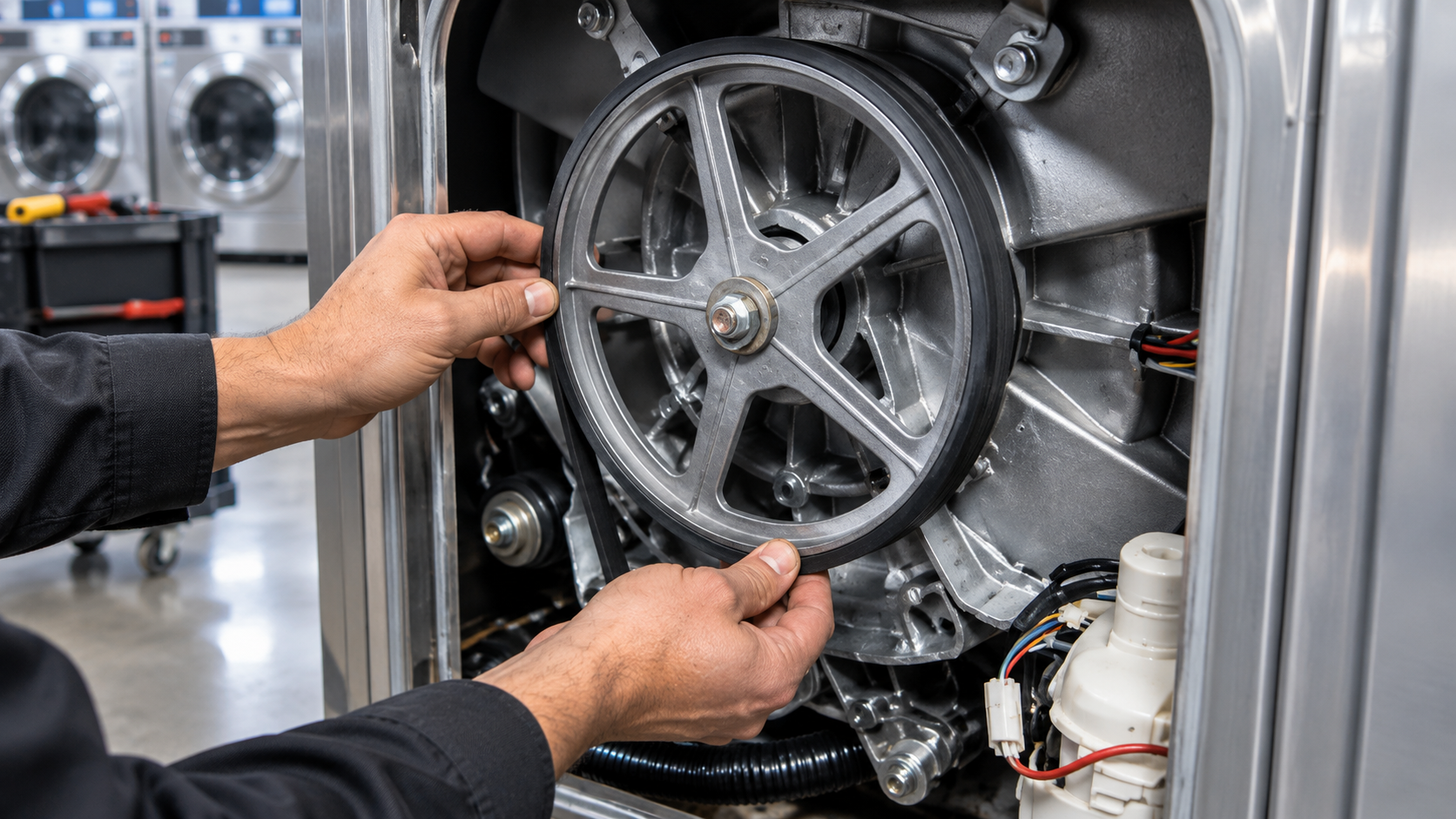
A commercial washer’s spin cycle should leave laundry damp, not dripping. When extraction weakens, the usual suspects are a worn drive belt, a failing motor, or a drainage restriction. Users notice immediately — because their dryer time (and cost) doubles. This is typically an inexpensive repair when caught early, and one of the clearest signals a machine is asking for help.
2. Grinding, Roaring or Banging During the Spin
New noises are never good news. A roar that builds with spin speed usually means drum bearings; banging often means failed suspension; grinding can be a foreign object or a failing motor. Bearings are the critical one: caught early, it’s a contained repair — run to failure, it can destroy the drum and total the machine.
3. Water on the Floor — Even a Little
Small leaks precede big floods. Door gasket wear, loose hoses, a cracked detergent housing or a failing water valve all start as a puddle you could ignore. Don’t: in an upstairs laundry room, the difference between a $200 hose repair and a five-figure water damage claim is a week or two of waiting.
4. Cycles Run Long — or Stop Midway
Modern commercial washers manage cycles electronically. When fill is slow (valve or supply problem), drain is slow (pump or clog), or the controller is failing, cycles stretch or stall. Users respond by re-running cycles — doubling water and energy use per load and accelerating wear on an already-struggling machine.
5. Error Codes Keep Coming Back
A cleared error code that returns isn’t fixed — it’s a symptom on repeat. Codes differ by brand, but a recurring one always means the underlying fault is still there. Note the code and the machine’s brand and model before calling; it meaningfully speeds up diagnosis and often lets us arrive with the right part on the truck.
What to Do When You Spot a Sign
Take the machine out of service if it’s leaking or making severe mechanical noise — running a failing machine multiplies the damage. Then call (562) 984-8685 with the brand, model and symptoms. Most early-stage repairs are same-day, single-visit fixes. And if your laundry room generates these calls regularly, a preventive maintenance plan catches this whole list before it starts.